
Sports Physical vs. Annual Physical: What’s the Difference?
Sports Physical vs. Annual Physical: What’s the Difference? On the surface, it’s easy to assume sports physicals and annual physicals are the same thing. They both assess your

For decades, cervical cancer screening has relied on the traditional Pap smear performed during a pelvic exam. While this approach has saved countless lives, many women delay or avoid screening because of discomfort or scheduling challenges.
A new option is changing that.
The FDA has approved certain human papillomavirus (HPV) tests that let patients collect their own vaginal sample, making screening more comfortable and convenient.
At Fairfax Family Practice Centers, we’re proud to offer the latest screening options and help our patients choose the approach that’s right for them.
Cervical cancer develops slowly, and in nearly every case, it begins with infection by certain high-risk types of HPV.
HPV is extremely common. In fact, nearly 80% of sexually active adults will be exposed to HPV at some point in their lives. While most HPV infections go away on their own without causing health problems, a small percentage can lead to precancerous changes and eventually cervical cancer.
The HPV vaccine is an important step in preventing cervical cancer, but it doesn’t replace the need for regular screening. Because HPV infections can occur years before cervical cancer develops, routine screening remains one of the safest and most effective ways to protect your health.
Traditionally, cervical cancer screening has been performed with a Pap smear, during which a healthcare provider collects cells from the cervix during a pelvic exam.
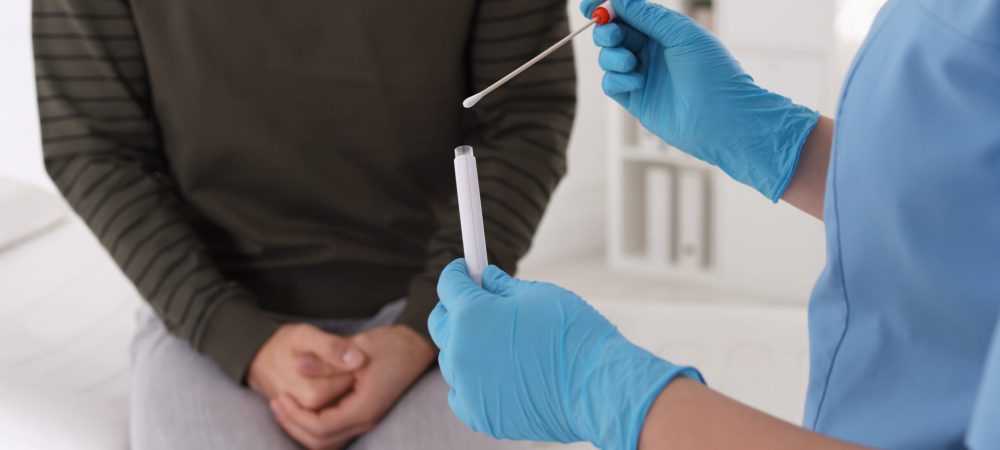
Instead of a clinician collecting the sample from the cervix, a self-collected HPV test allows eligible patients to collect their own vaginal sample using an FDA-approved swab or brush.
The process is simple and takes a few minutes. Self-collection is available in two ways:
Research shows that self-collected HPV testing is highly accurate at detecting high-risk HPV in people who are eligible for this screening option. However, there are a few important differences to know.
Self-collected HPV testing may be an option for many average-risk women between the ages of 25 and 65. However, it is not appropriate for everyone. Patients with certain risk factors may need clinician-collected screening instead. Self-collected HPV testing is not recommended if you:
If you’re unsure which screening option is right for you, your healthcare provider can help you choose the approach that best fits your medical history and current health needs.
Cervical cancer is one of the most preventable forms of cancer, yet too many women remain overdue for screening. The availability of self-collected HPV tests offers a promising new option for eligible patients to stay current with recommended cervical cancer screening.
At Fairfax Family Practice Centers, we are committed to offering the latest evidence-based screening options for our patients, including the self-swab option. If you’re due for cervical cancer screening, don’twait. Schedule an appointment with your provider to discuss which screening option is right for you.
This post was written by Broadlands Family Practice – Brambleton physician K. Michael Rodriguez, MD, FAAFP.
New to FFPC? Find a location near you.

Sports Physical vs. Annual Physical: What’s the Difference? On the surface, it’s easy to assume sports physicals and annual physicals are the same thing. They both assess your

Catch Rays, Not Cancers: Your Ultimate Guide to Winning at Sun Safety May is officially Skin Cancer Awareness Month, which
Patients can securely request medical records via our release-of-information partner, Datavant. Please note that state and federal laws allow for additional fees for copies of medical records that are not requested by healthcare providers for direct patient care. To reduce costs, patients should consider requesting specific information rather than a complete record.